The Nice Fine Arts Museum offers exhibition catalogs for sale at its shop. These catalogs provide detailed information about current and past exhibitions, as well as the artworks featured in them.
Exhibition catalogs available at the museum shop
Each catalog offers an in-depth analysis of the artists, artistic movements, and themes addressed in our exhibitions. They include high-quality reproductions of artworks, essays, and explanatory texts to deepen your understanding of the art presented.
Exhibition catalogs are available for purchase at the museum shop, and acquiring them directly supports our activities and commitment to the preservation and dissemination of art.
Whether you are a regular visitor or a curious art lover, these catalogs are a valuable resource for exploring our collection and deepening your knowledge of art.
We invite you to visit the boutique of the Nice Fine Arts Museum to browse our selection of current and past exhibition catalogs. They are an excellent complement to your museum experience and an opportunity to extend your discovery of the art presented at the museum.
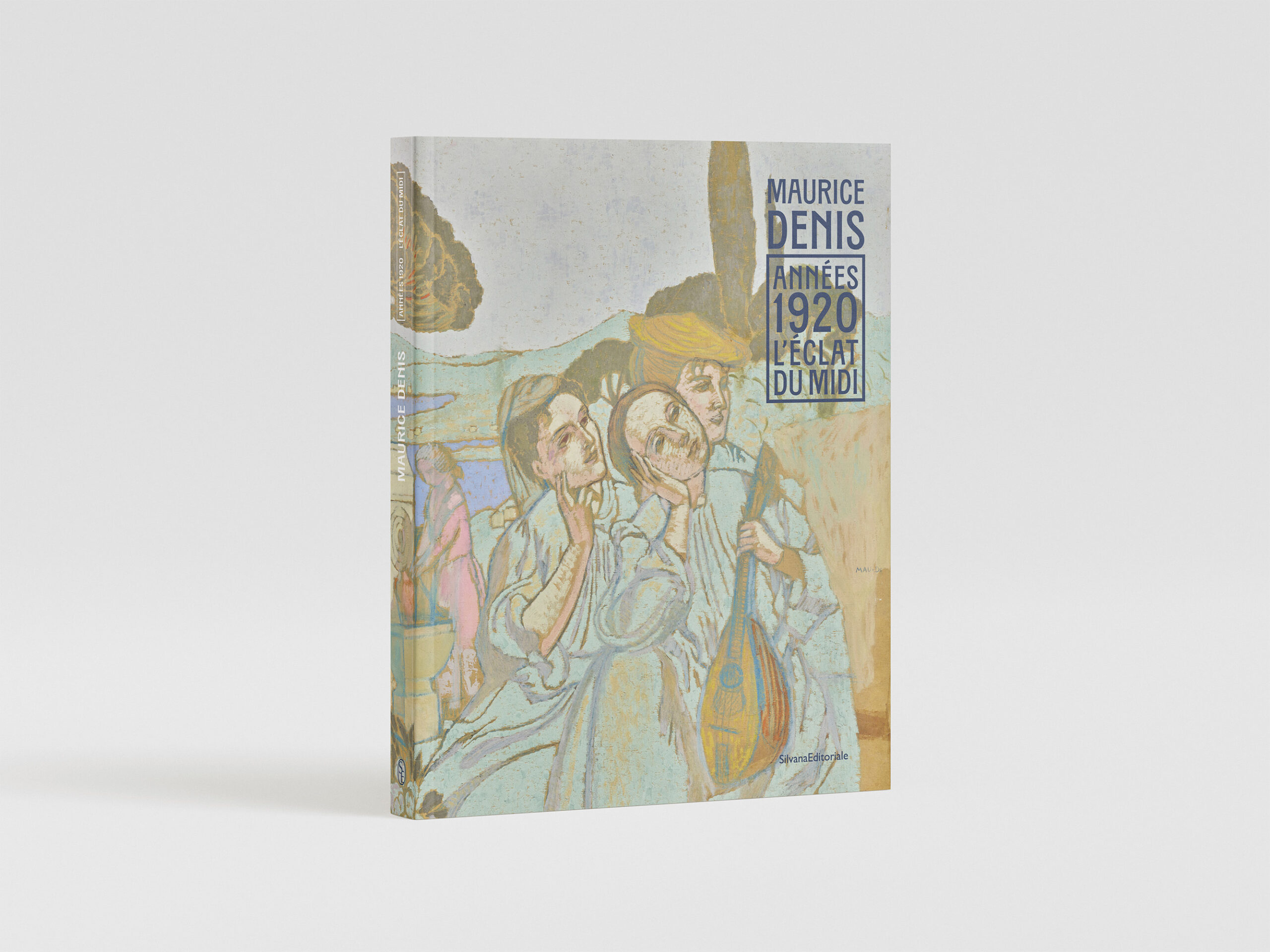
Maurice Denis, 1920’s. Splendor of the south
Under the direction of : Johanne Lindskog et Jeanne Pillon
Published by : Silvana Editoriale
Celebrating the centenary of the exhibition ‘Maurice Denis (1870-1943)’, organised by the Société des Beaux-Arts de Nice in 1925, this book reveals the importance of the artist’s travels in the South of France.The encounter between Denis’s world and the French Riviera in the 1920s also provides an opportunity to take a closer look at this very special period in the painter’s life. After the death of his first wife in 1919, his marriage to Elisabeth Graterolle restored his creative vitality, enabling him to take on the prestigious commissions that crowned his career.The blues and pinks sparkling with winter light that flood his works from this period reflect the fulfilment of an artist who found new inspiration on the shores of the Mediterranean.
Berthe Morisot in Nice. Impressionist Stages
Under the direction of : Johanne Lindskog and Marianne Mathieu, assisted by Jeanne Pillon
Published by: Éditions Electa
Authors: Louise Guillot, André Z. Labarrère, Johanne Lindskog, Marianne Mathieu, Jeanne Pillon, Jean-Paul Potron, Véronique Thuin-Chaudron
Known as one of the founders of a group that changed the course of art history, Berthe Morisot (1841-1895) is recognized as the first female Impressionist. Her extremely varied body of work includes nearly five hundred paintings, as well as a vast collection of watercolors, pastels, drawings, and even prints. In the 1880s, this prolific output was inspired by her dazzling discovery of the Riviera, where she stayed twice in Nice during the winters of 1881-1882 and 1888-1889. Featuring a significant number of previously unpublished documents—letters, sketches, more finished drawings, paintings—and based on extensive research, this book thoroughly reconstructs Morisot’s vacations.

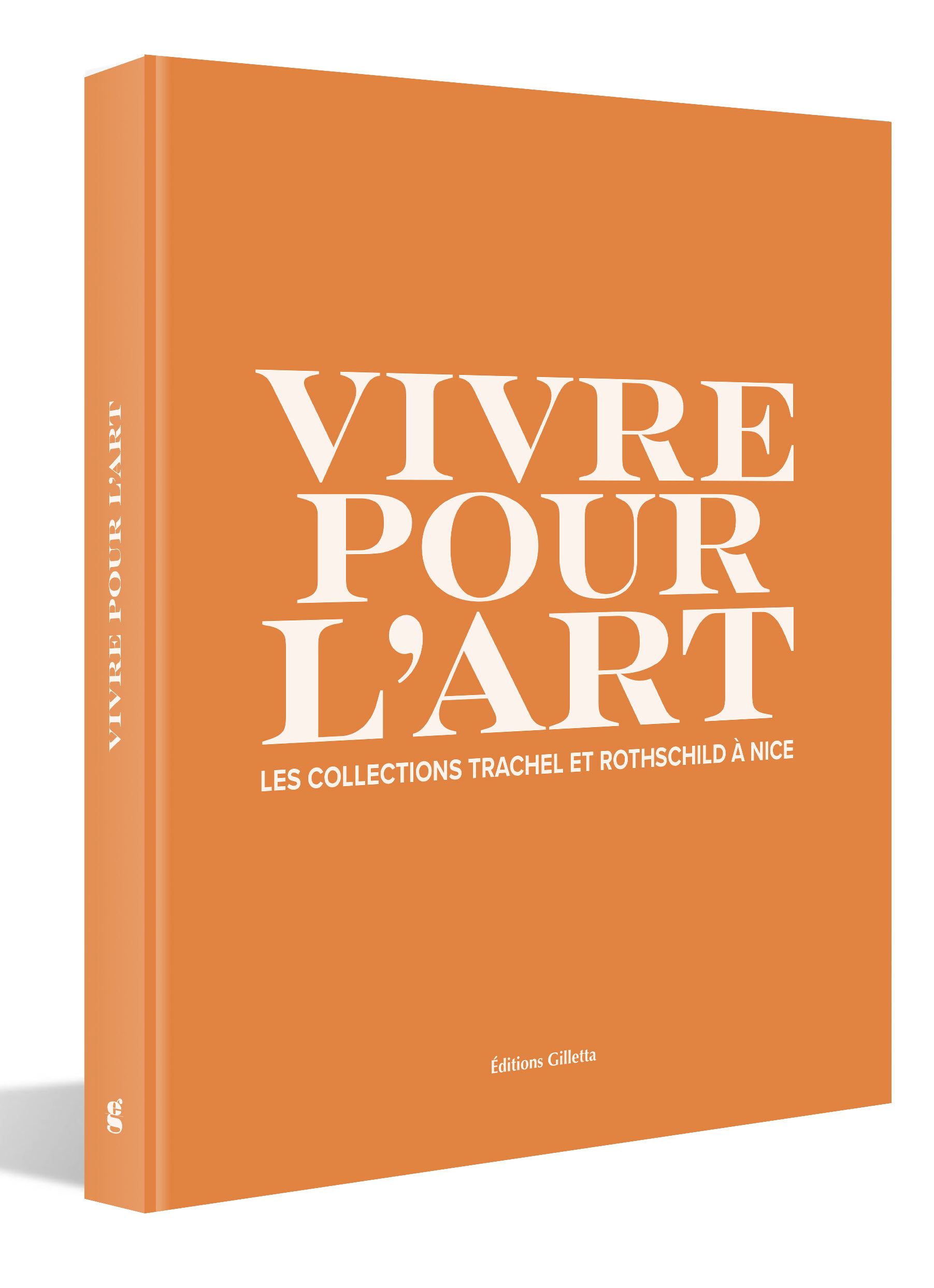
Living for Art: The Trachel and Rothschild Collections in Nice
Under the direction of: Johanne Lindskog and Jeanne Pillon
Published by: Éditions Gilletta
It is the surprising encounter between the illustrious Rothschild and the modest Niçois Trachel – two families that appear to be polar opposites – that enriches the collections of the Nice Fine Arts Museum extraordinarily between the years 1880 and 1910. Each member of these two families shares the same desire to live for art, notably Hercule, Dominique, Antoine, Françoise (known as Fanny) and Fanny Trachel, and Charlotte, Alphonse, and Edmond de Rothschild. They all dedicated their lives to the creation and collection of artworks. Driven by the desire to make them accessible to all, they donated over seventeen hundred works to the Nice Fine Arts Museum. This book retraces both the journey of these personalities and that of these works, whose geographical, chronological, and typological variety highlights European creation from Antiquity to the 19th century.
Gustave-Adolphe Mossa
Under the direction of: Johanne Lindskog and Jeanne Pillon
Published by: Éditions Gilletta
Authors: Jean-Pierre Bourdin, Juliette Chevée, Rémy Gasiglia, Françoise Kerr, Clara Langer, Johanne Lindskog, Sylvie Lombart, Charles Mossa, Jeanne Pillon, Jean-Paul Potron, Yolita René, Yves Sarfati.
On the occasion of the fiftieth anniversary of the passing of the Niçois artist and curator Gustave-Adolphe Mossa, this work presents his emblematic symbolist paintings and watercolors, which foreshadow surrealism and heroic fantasy, as well as remarkably virtuosic paintings, sometimes with licentious subjects. But it also offers a dive into the many other artistic domains that the painter explored throughout his life. These unprecedented insights provide an exciting interpretation of Gustave-Adolphe Mossa’s personality and his artistic work, whose exploratory richness is matched only by the erudition put at the service of the imaginary. Johanne Lindskog and Jeanne Pillon are the directors of this publication.

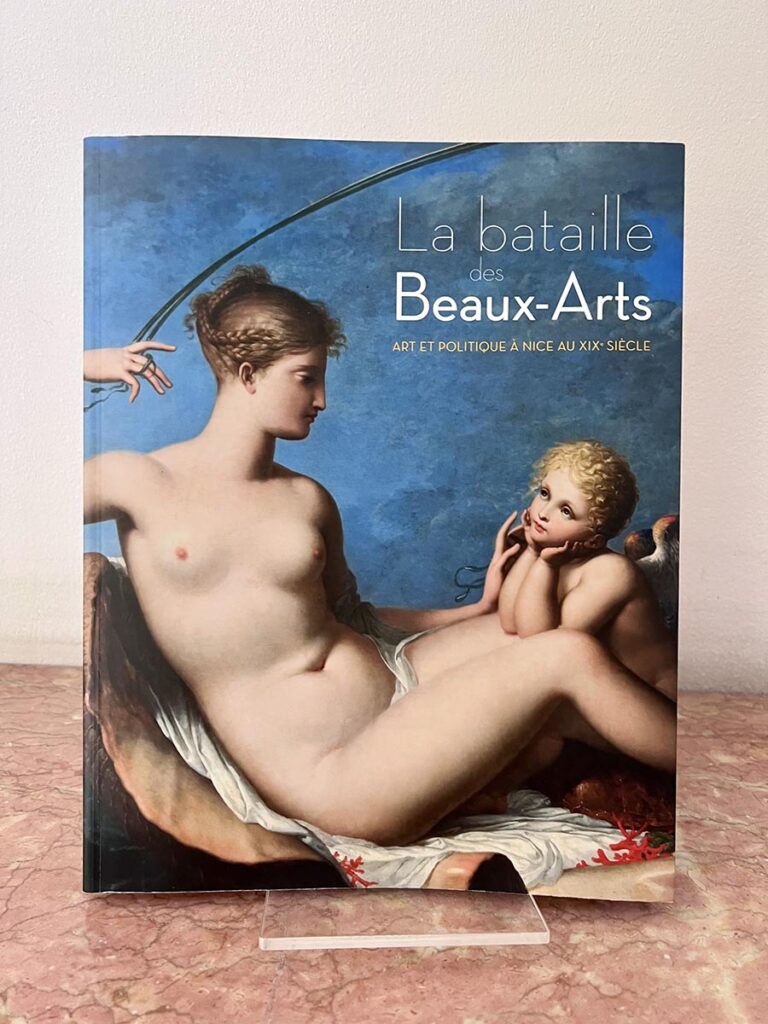
The Battle of Fine Arts: Art and Politics in Nice in the 19th Century
Under the direction of: Johanne Lindskog, Marion Duvigneau, Jean-Paul Potron
Published by: Éditions Snœck
Authors: Henri Courrière, Marion Duvigneau, Johanne Lindskog, Jeanne Pillon, Jean-Paul Potron, Mathilde Pouchol, Elsa Puharré, Véronique Thuin-Chaudron, Natalia Burianyk
One hundred and sixty years after the annexation of Nice to France, the Jules Chéret Fine Arts Museum revisits its genesis, intimately linked to this historical event. Indeed, when Napoleon III visited the city in 1860, artistic activity remained the result of private initiatives. There was no significant museum establishment to structure collections and events.
The Empire then implemented an assertive policy, marked by benevolence towards the newly annexed territories. Very quickly, the project of the Fine Arts Museum was supported by personalities whose origins, situations, and diverse political positions fueled an exciting debate intertwining aesthetic and social dimensions with issues of identity and territorial claims.