
Acquisition of the Kotschoubey-Thomson villa
The project to create a Fine Arts Palace in Nice was initiated by the Nice Fine Arts Society, founded in 1877, which aspired to establish a suitable venue for its activities and the city’s artworks. This project was supported by influential local figures and the collective desire to equip Nice with a major cultural infrastructure.
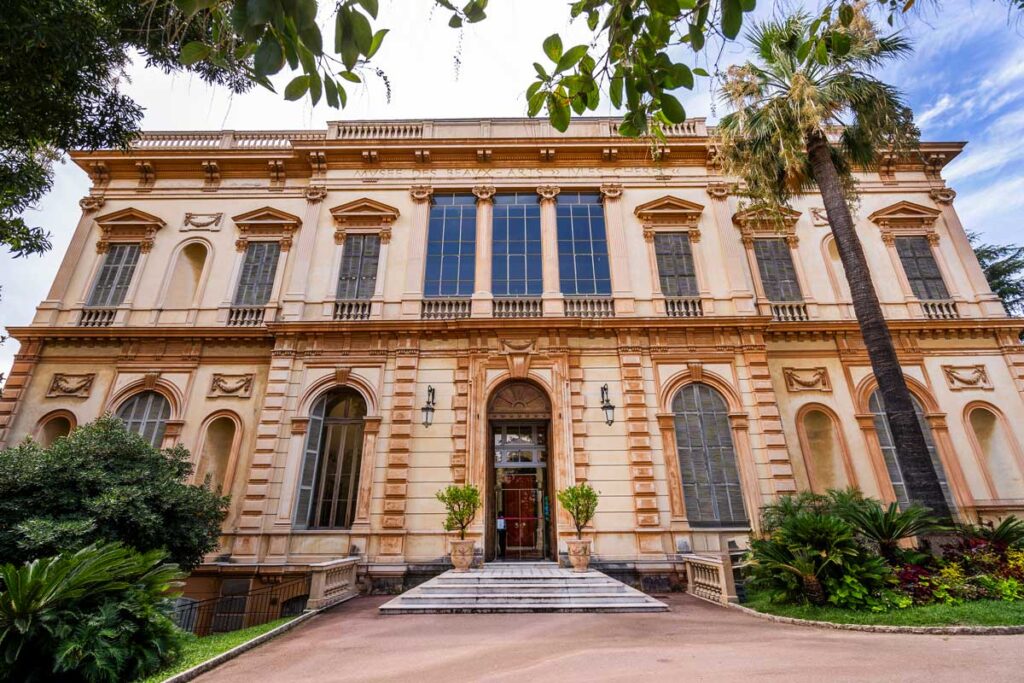
In 1925, the Fine Arts Society identified the lavish Kotschoubey-Thomson villa as the ideal site for the future palace. This magnificent residence, originally built for Princess Elisabeth Kotschoubey, was acquired by the city of Nice, which undertook its transformation into an arts space under the direction of Architect Nicolas Anselmi.
Transformation and renovation
In 1926, the City of Nice acquired the sumptuous mansion, initially built by Ukrainian Princess Elisabeth Kotschoubey (1821-1897).
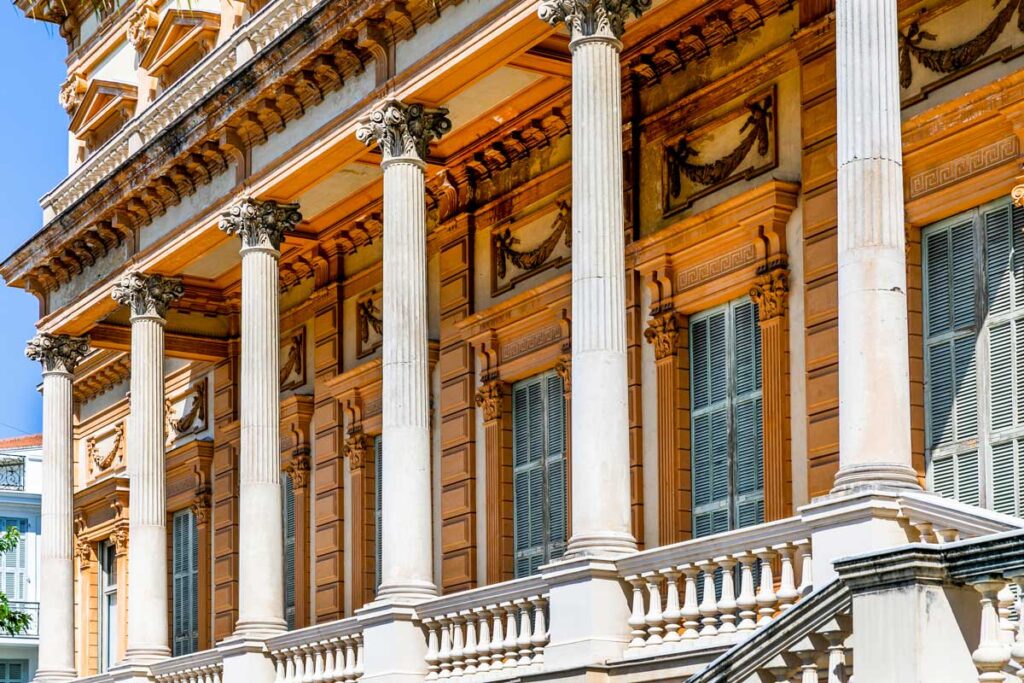
The completion of the building was overseen by Architect Constantin Scala (1849-1944), aiming to create a spectacular reception space for the American couple Anne and James Thomson (1860-1923 and 1830-1897).
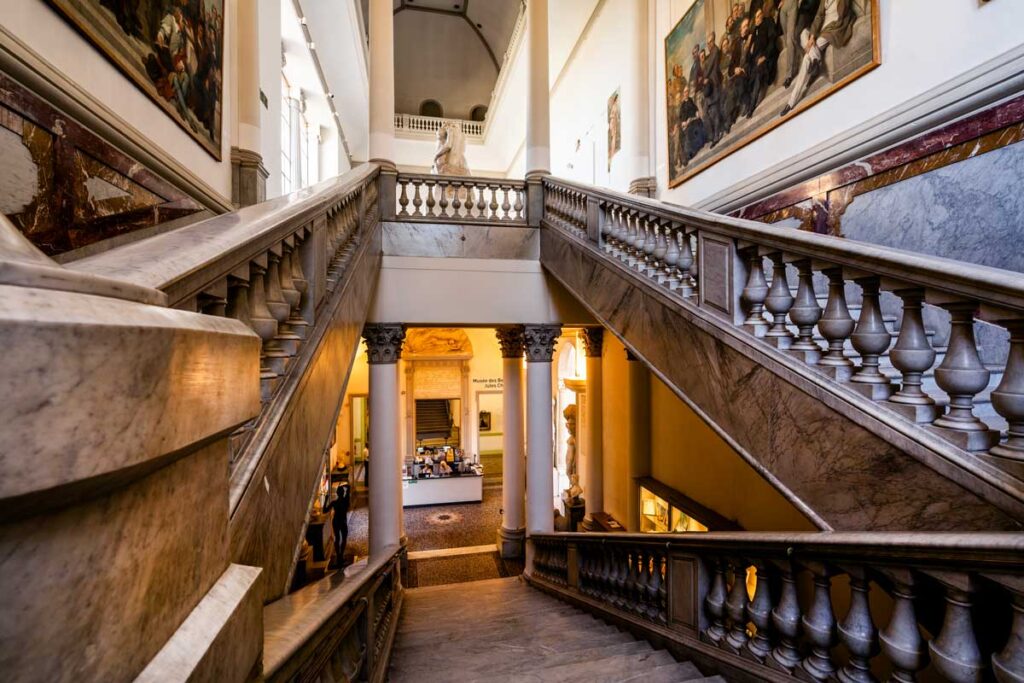
To convert it into a museum, the City Architect Nicolas Anselmi (1883-1963) made extensive modifications to the building, seeking a design that would best highlight the artworks. On the ground floor, the colonnade and interior balcony were demolished; in the grand staircase and on the first floor, the pilasters were leveled. The painted wall and ceiling decorations were covered with faux stone finishes.

Alexis Mossa, whose lifelong project was finally coming to fruition, passed away shortly after the municipality acquired the palace.
His son, Gustave-Adolphe Mossa, succeeded him as curator, and two new figures joined the effort to open a museum that would meet the high expectations held since the 1870s. These were Joseph Saqui, newly appointed director of Nice’s museums, and Baron Joseph Vitta, a great collector, patron, and friend of Jules Chéret. Vitta, very hands-on, personally installed the hundreds of Jules Chéret works he donated to the city on the dedicated first floor.
Inauguration and subsequent developments
The “Palace of Arts, Jules Chéret Museum” was finally inaugurated on January 7, 1928, under the presidency of Henri Verne, director of National Museums, Alexandre Mari, mayor of Nice, Ange Benedetti, prefect of the Alpes-Maritimes, and Jean Médecin, deputy delegate for Public Instruction and Fine Arts.
Among the guests were Gabriel Hanotaux, politician and member of the French Academy, future president of the first Society of Friends of the Chéret Museum, and major donors such as Ursule Ziem, Baron and Baroness Vitta, and Mr. and Mrs. Fenaille.
It is noteworthy that, although the inauguration seemed to be the natural culmination of several years of work by art and heritage enthusiasts in Nice, it came at an opportune time for the future municipality of Jean Médecin, who would be elected mayor in December of the same year.
The Fine Arts Palace of Nice, now the Jules Chéret Fine Arts Museum, is more than just an exhibition space; it is an institution that testifies to the city’s ongoing commitment to the arts and culture.
These historical elements are extracted from the text “Le musée hypothétique, pérégrinations d’une institution niçoise,” published by Johanne Lindskog in the book “La bataille des Beaux-Arts. Art et politique à Nice au XIXe siècle,” by Snoeck Editions.