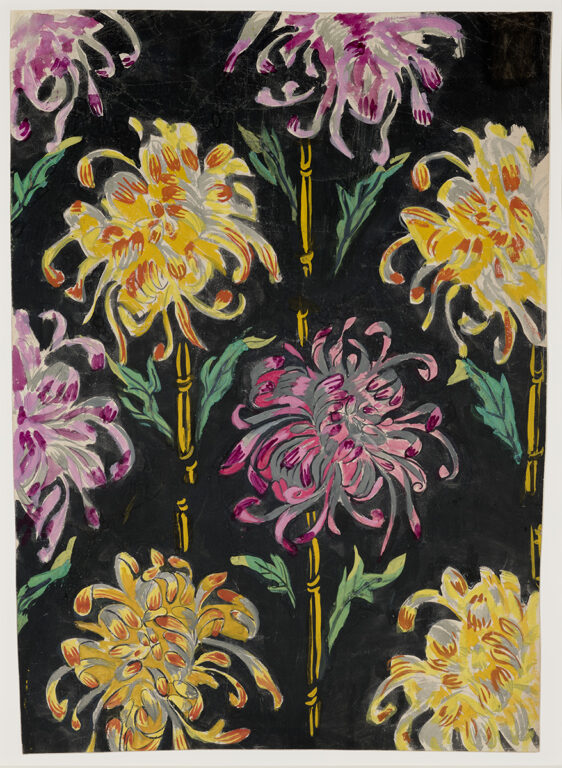
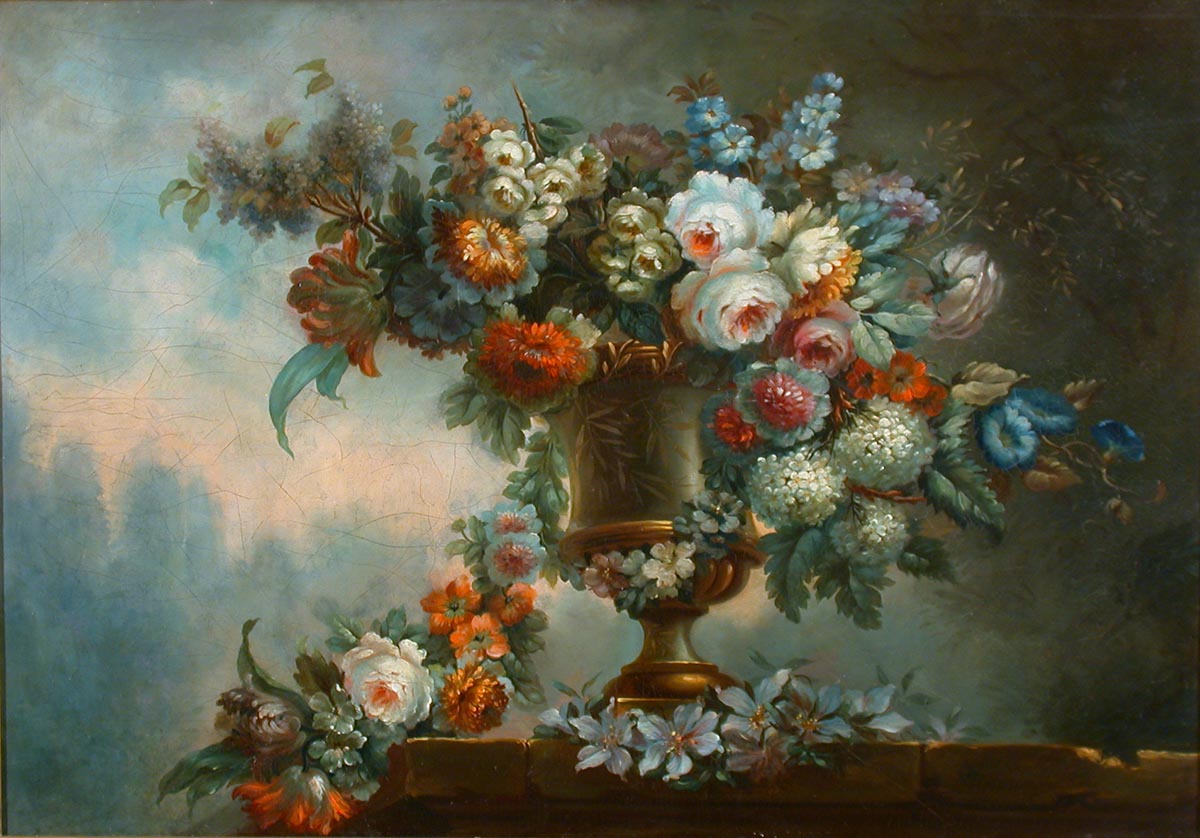
As part of the Biennale 2022, the City of Nice invited you to discover the exhibition “Fireworks Flowers: Bouquets from the Fine Arts Museum.” Over a hundred works from the 14th to the 20th century showcased the diversity of floral symbolism in art history.
While artworks from ancient periods are often perceived as “decorative” by the general public, they were, at the time of their creation, charged by the artist or the commissioner to convey a number of messages. The most well-known, concerning flowers, are related to the memento mori of Baroque vanitas or the symbols of love and purity in religious painting.
However, the meaning of the flower and the artwork that displays it can refer, much more broadly, to an era, an event, the personality traits of an individual, or the knowledge they possess. A nuanced iconographic approach thus allowed one to slip into the shoes of the viewer of the 17th or 19th century and grasp the significance of floral motifs, and through them, the function of the artwork in its original context.
From sumptuous painted bouquets to tiny flowers hidden in the crevices of marble, to Raoul Dufy’s Cubist experiments, the fireworks flowers of the Fine Arts Museum revealed all their secrets on this occasion.
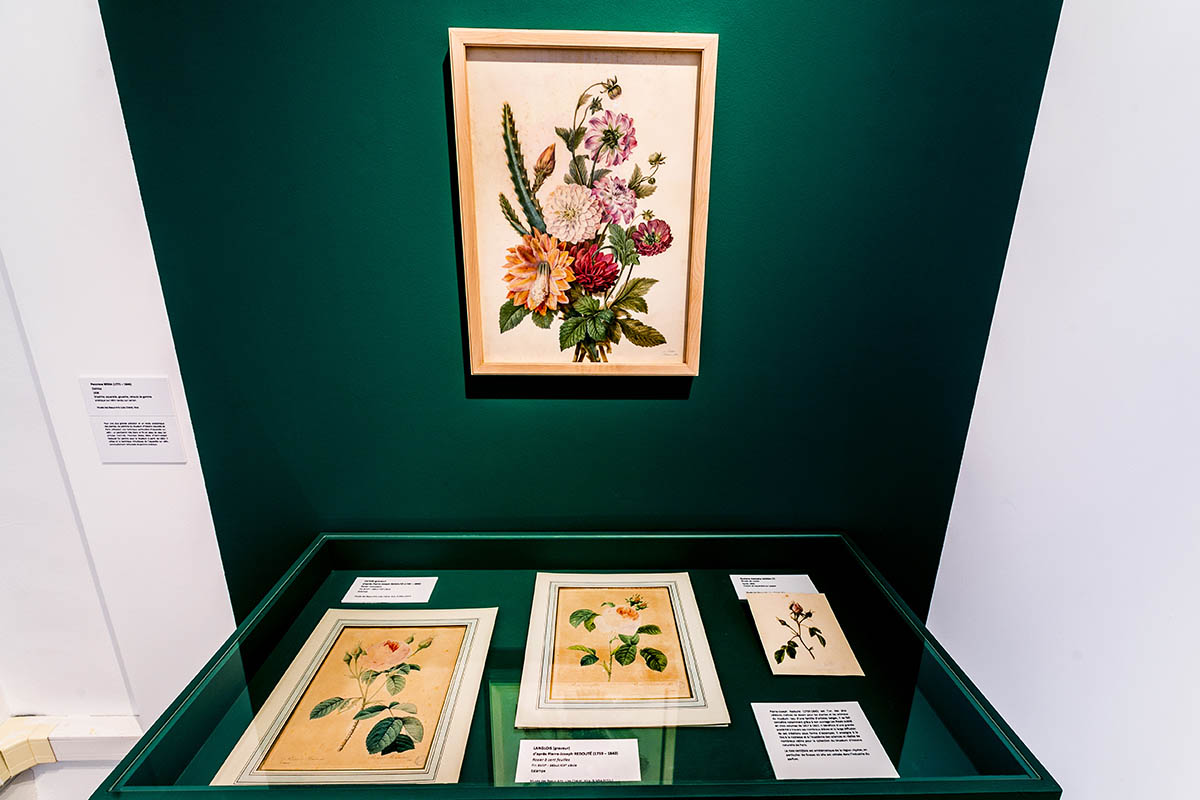
A unique partnership with the Trade Union of Florists of the Alpes-Maritimes offered a dual perspective on the artworks. The opening reception featured an exhibition of floral arrangements within the museum, inspired by the works in the exhibition, which also formed the basis of a guided tour written by the florists (fr).
Ten partner shops displayed reproductions of museum artworks on this occasion, offering for sale bouquets freely inspired by them:
- Ageron Fleurs – Nice
- Abelia Fleurs – Magagnosc
- André Fleurs – Nice
- Art Floral – Cannet
- L’atelier fleuriste– Saint Laurent du Var
- Maria Fleurs – Cannes
- Au Paillon fleuri – Nice
- Bravi Fleurs – Nice
- France Flor – Nice
- Un peu beaucoup – Nice
Artworks and Views of the Exhibition

by Cynthia and Patrice Priolo, Florists
L’ATELIER FLEURISTE
40 Boulevard Ossola 06700 Saint Laurent du Var

by Youssel Isfouli, Florist
Maria Fleurs
5 Place du Commandant Maria 06400 Cannes
Textual Transcription of the Video
Biennale des Arts de Nice
Starting June 9, 2022
11 exhibitions in the museums of the City of Nice
Nice.fr
Johanne Lindskog, Director of the Museum of Fine Arts
[00:00:11] The exhibition “Fleurs d’artifice: The Bouquets of the Museum of Fine Arts” has been on display since June 17 and will be open until October 30.
[00:00:19] It aims to show, through the history of art, why artists have depicted flowers. The flower motif can have many meanings.
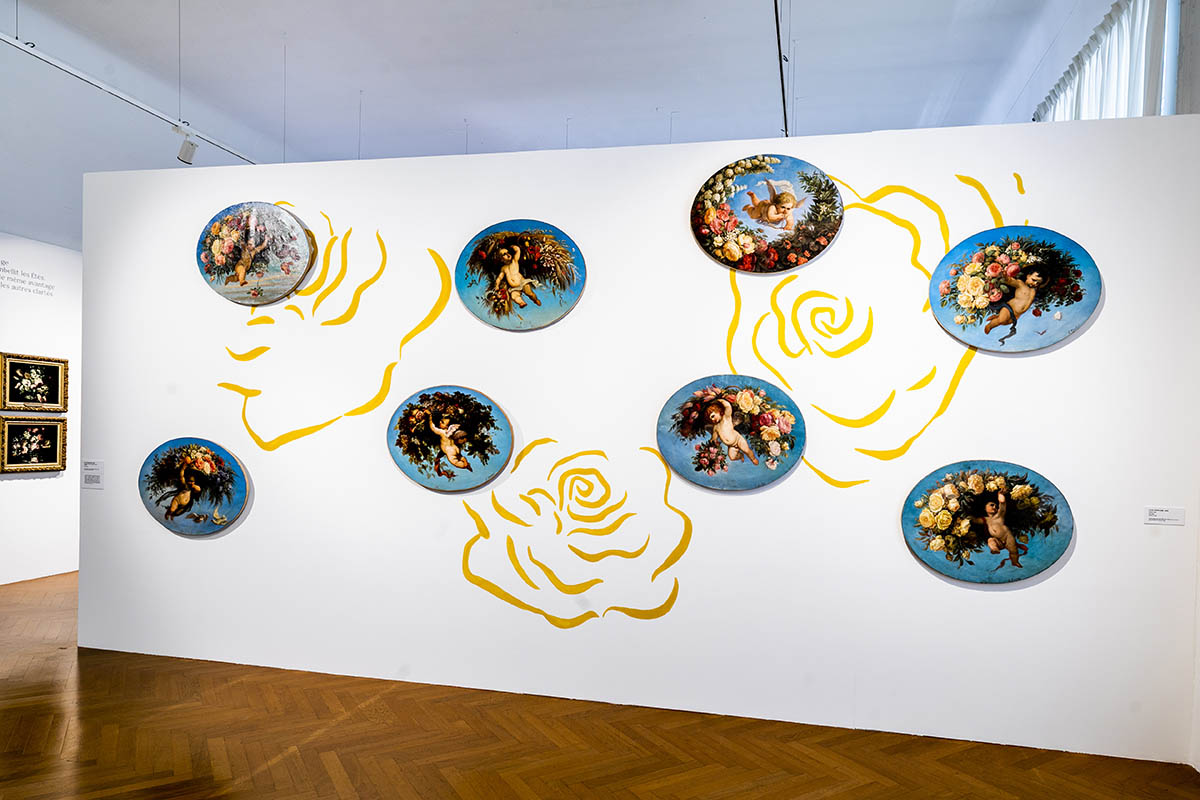
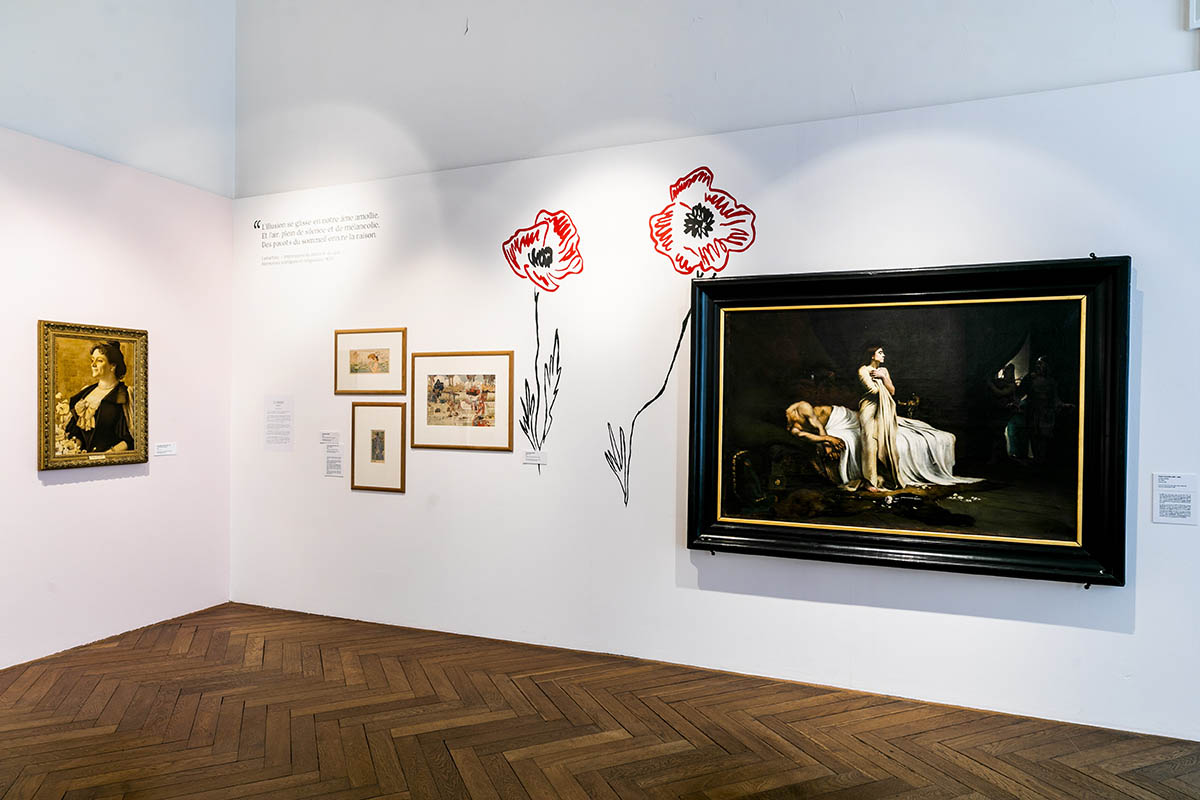
[00:00:30] From the thirteenth century to the twentieth century, we see that it carries various messages intended for the viewers. We collaborated with illustrator Charlotte Colt, who created gigantic flowers in each exhibition room: tulips, poppies, chrysanthemums, and lilies, which help us explain why these particular flowers are frequently represented in artworks.
[00:01:04] We partnered with the Florists’ Union, allowing us to work directly with flower professionals.
[00:01:14] For the exhibition’s opening, they created large floral compositions directly inspired by works they selected from the collection.
[00:01:24] They also composed very personal comments, presented near the chosen works, along with photos of their floral arrangements.
[00:01:33] In the twentieth century, artists embraced the motif of the still life, specifically the flower, as a non-narrative theme allowing them to further explore abstraction. We see here with Raoul Dufy, whose museum holds a magnificent collection, that the chrysanthemum motif is simplified to the extreme, becoming these tachist flowers fully immersed in abstraction. These are gouaches, which are textile designs for creating upholstery fabrics or clothing fabrics.
[00:02:10] Here, we have this seventeenth-century work from the Italian School, depicting an Annunciation, the moment when Mary learns that she will become pregnant. Between the announcing angel and Mary is a lily. This lily is extremely important in the Middle Ages and the Renaissance, symbolizing Mary’s purity and the miracle of her giving birth while remaining immaculate.
[00:02:46] For this exhibition, we worked extensively on the Museum of Fine Arts’ collection, allowing us to discover a small masterpiece in the collection, which is the painting next to me. It is a painting by Jan Brueghel, depicting a still life with flowers in elaborate vases and accompanied by a small squirrel.
[00:03:13] This painting is characteristic of seventeenth-century Flemish paintings, produced in series but always with slight variations, marked by great detail and preciousness. These paintings were extremely valuable, and the species of flowers depicted also referred to the qualities of the painting’s patron.