
Limoges workshop,
Shrine of Saint Commodus
Not on display
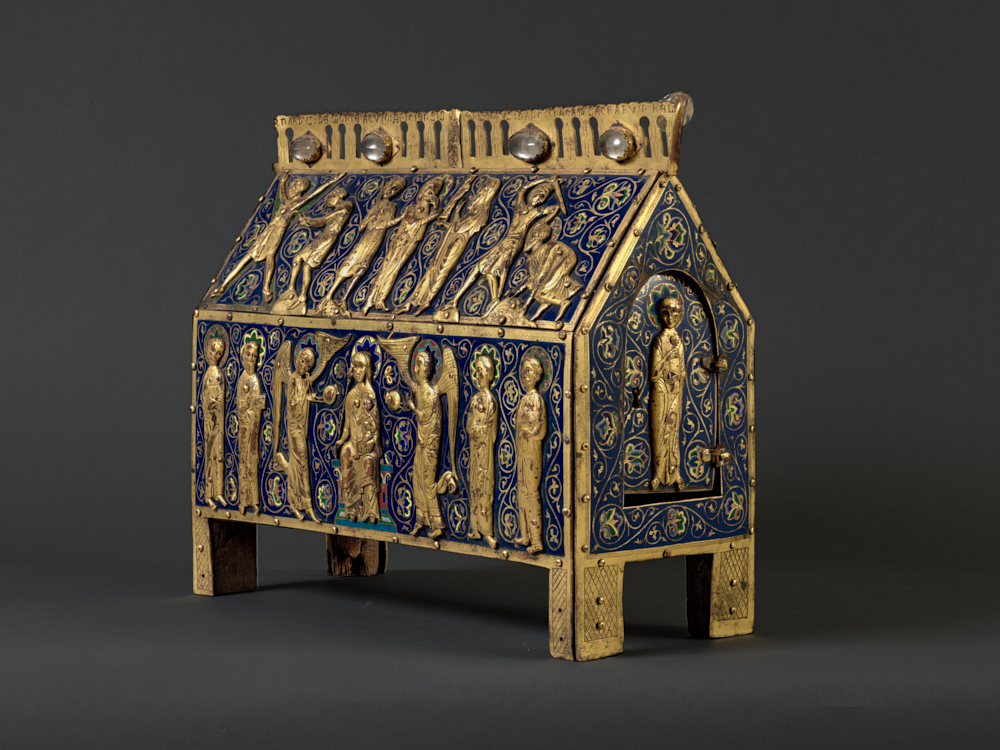
This reliquary shrine probably contained the bones of Saint Commodus, whose martyrdom it depicts. It is part of the emblematic champlevé enamel production of 13th-century Limoges. This technique, celebrated since its invention in the 12th century, was widely used throughout Europe in the 13th and 14th centuries.
The casket, topped by a two-sloped roof, is decorated with hammered copper figures in relief on a wooden core with a background of coloured and floral champlevé enamel. Champlevé enamel is a technique used to fill metal cavities with enamel (liquid glass).
The roof is decorated with four white glass cabochons on each side and an imposing glass bead. On one side, Christ on the Cross is surrounded by six haloed apostles, Mary, John and two angels.
Saint Peter, on the right, is shown holding the keys to heaven, and Saint Paul, on the left, is shown carrying a sword. The other side shows the Virgin Mary and the infant Jesus surrounded by angels and apostles.
The sloping sides depict the saint’s martyrdom. First at prayer, he is then presented to the emperor, who passes sentence. Stripped of his clothes, he is successively scourged and chained. The other side shows him being flayed, his refusal to apostasise and his beheading.
This pictorial narrative enabled the faithful to recall the lives of the first Christians and to be edified by the demonstration of their faith, which stood the test of time.
.
Donation of Mr. Joubert in 1926, Filling of the Masséna Museum in 2000
© François Fernandez