> Discover a selection of commented works from the collection
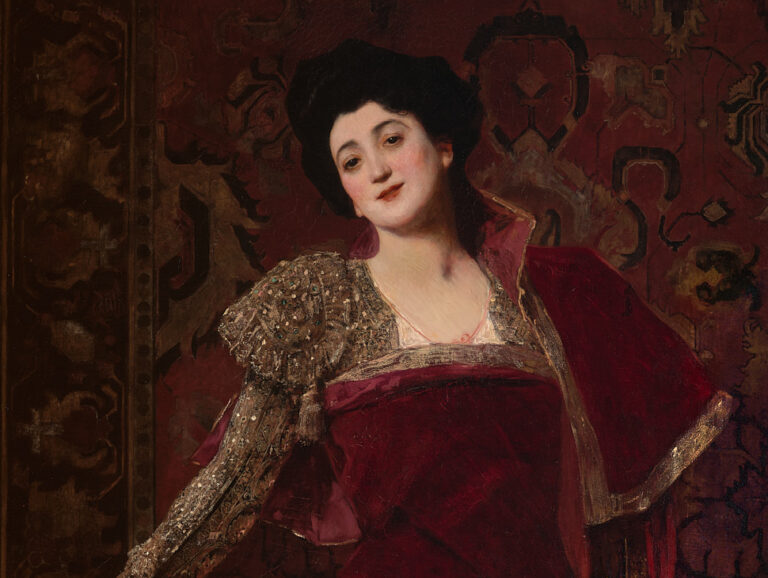
Donations from artists, collectors, and socialites offer a glimpse—albeit limited and subjective—into this romanticized era and the cosmopolitan spirit of Nice. Featuring carnival scenes as well as portraits of famous composers and foreign princesses, the exhibition shines a spotlight in particular on talented opera and dramatic artists who, through the global recognition they achieved, exercised unprecedented independence and authority.
The question of representation thus extends from the stage to the art of portraiture, from performance to self-projection, and also reveals the importance of fashion, which reached its peak in the second half of the 19th century with the development of ready-to-wear clothing and the emergence of haute couture. By immortalizing their subjects in theatrical costumes, disguises, festive attire, ceremonial garments, or the very latest in modern fashion, portraitists offer them, on the canvas, the setting for a final and eternal performance.